People with fancy MBA’s like to create complicated financial models
As a simpleton I break down a P&L into 4 numbers
This model works no matter the size of the business
(View Tweet)
Note: Thread
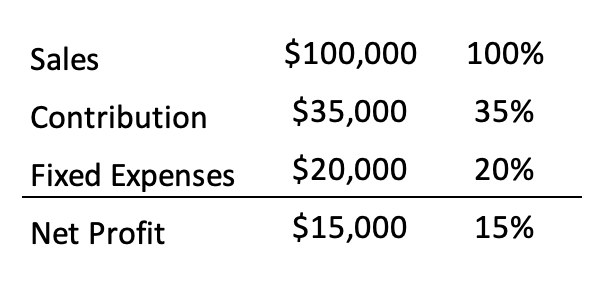
Every business has 4 key numbers:
Sales - cash that comes into the business
Contribution - cash left over after paying all variable expenses
Fixed Expenses - stable recurring expenses
Net Profit - profit left after paying all expenses
Let’s dive into each one: (View Tweet)
1/ Sales - my dad taught me “sales fixes everything”
There’s a lot of truth to that statement
Sales is your lifeblood. You can’t save your way to wealth. You need to blow up sales through more marketing, locations, services, higher prices & better customer service (View Tweet)
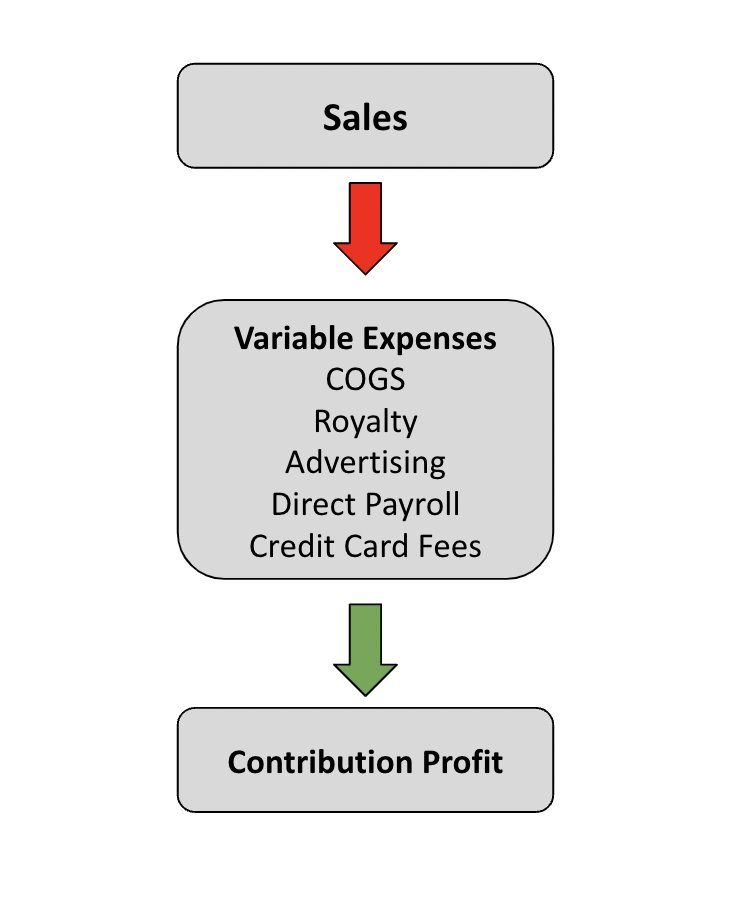
2/ Contribution - cash left over after paying all variable expenses
Variable expenses are directly tied to your sales
When sales go up, variable expenses go up
When sales go down, variable expenses go down (View Tweet)
For franchises there 5 major variable expenses:
1/ COGS - cost of goods sold
2/ Royalty - for franchises
3/ Advertising - you must advertise to drive leads
4/ Direct Payroll - cost of performing the service
5/ Credit Card Fees - cost per transaction (View Tweet)
Contribution is the amount left over after paying all the variable expenses
(View Tweet)
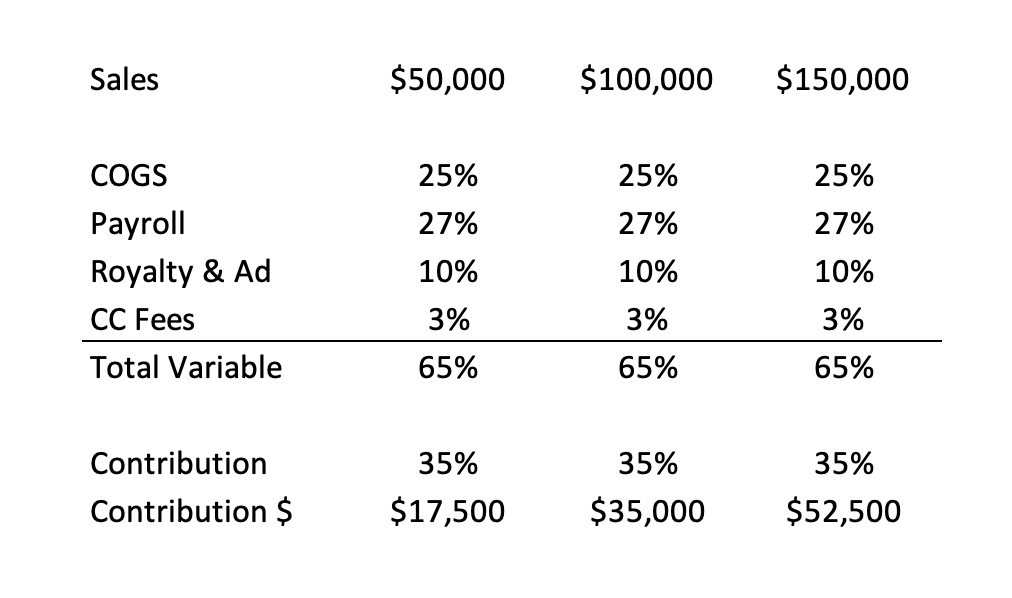
Let’s say we’ve got 65% of variable expenses, leaving us a 35% contribution margin
That 35% margin is sticky no matter the sales volume.
(View Tweet)
3/ Fixed Expenses
All of the expenses that are fixed every month. They have minimal correlation to sales volume
Rent & Utilities
Debt Payments
Fixed Payroll (Managers, Admin, etc)
Insurance
Technology
Other Misc Expenses
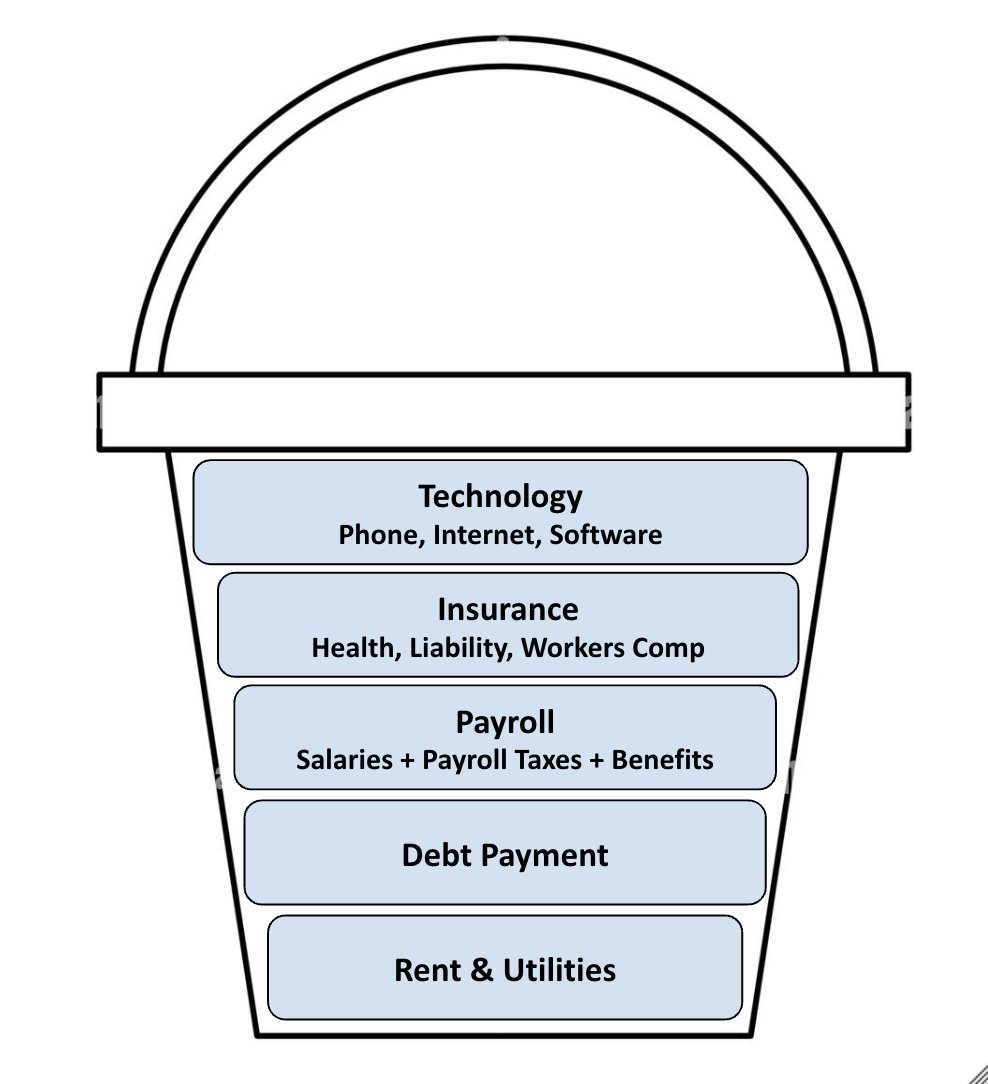
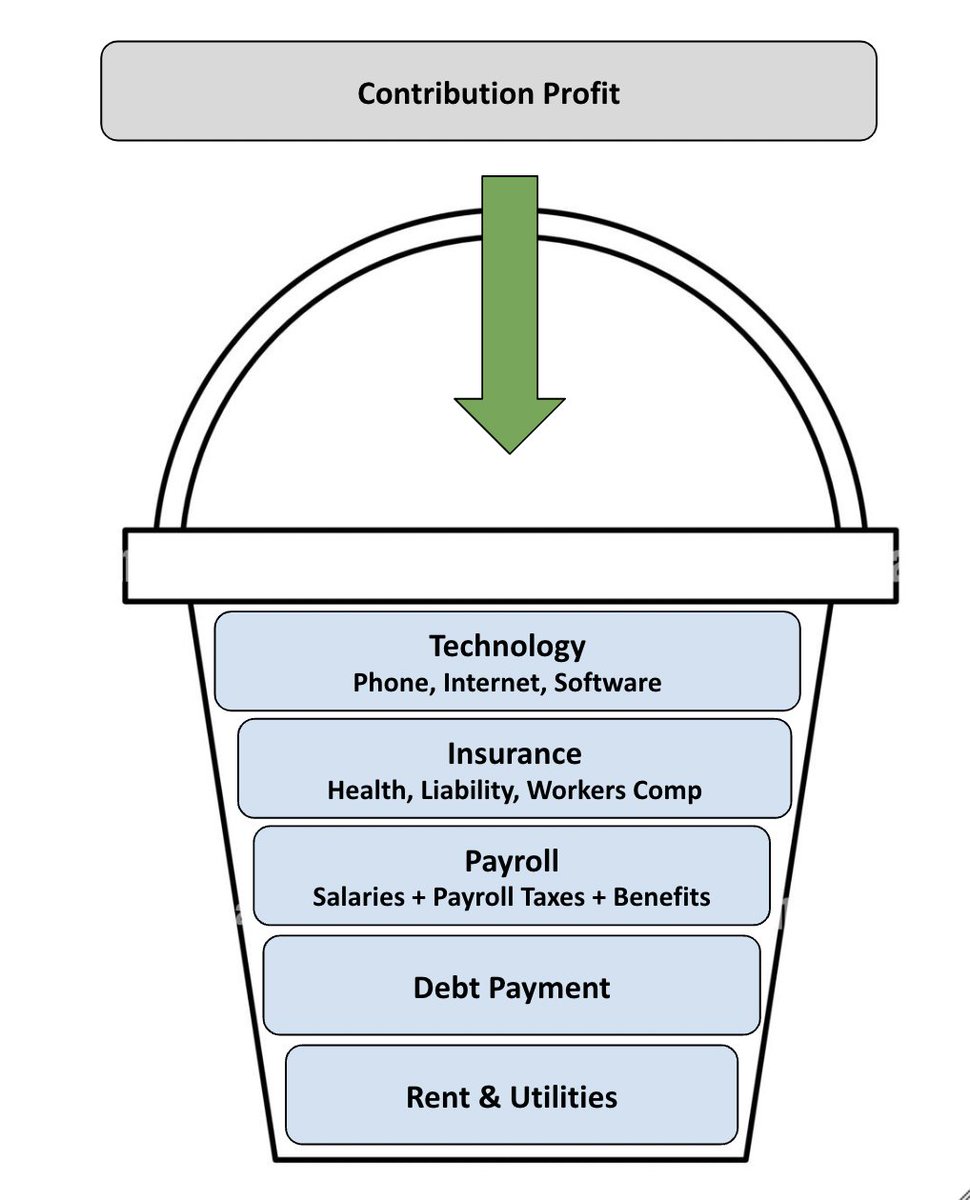
Picture your fixed expenses as a bucket
(View Tweet)
The contribution profit pours into the fixed costs bucket
The first $5k of contribution goes to pay your rent, $2k for the debt payment, $10k for payroll, $3k for insurance, technology & the remaining expenses
(View Tweet)
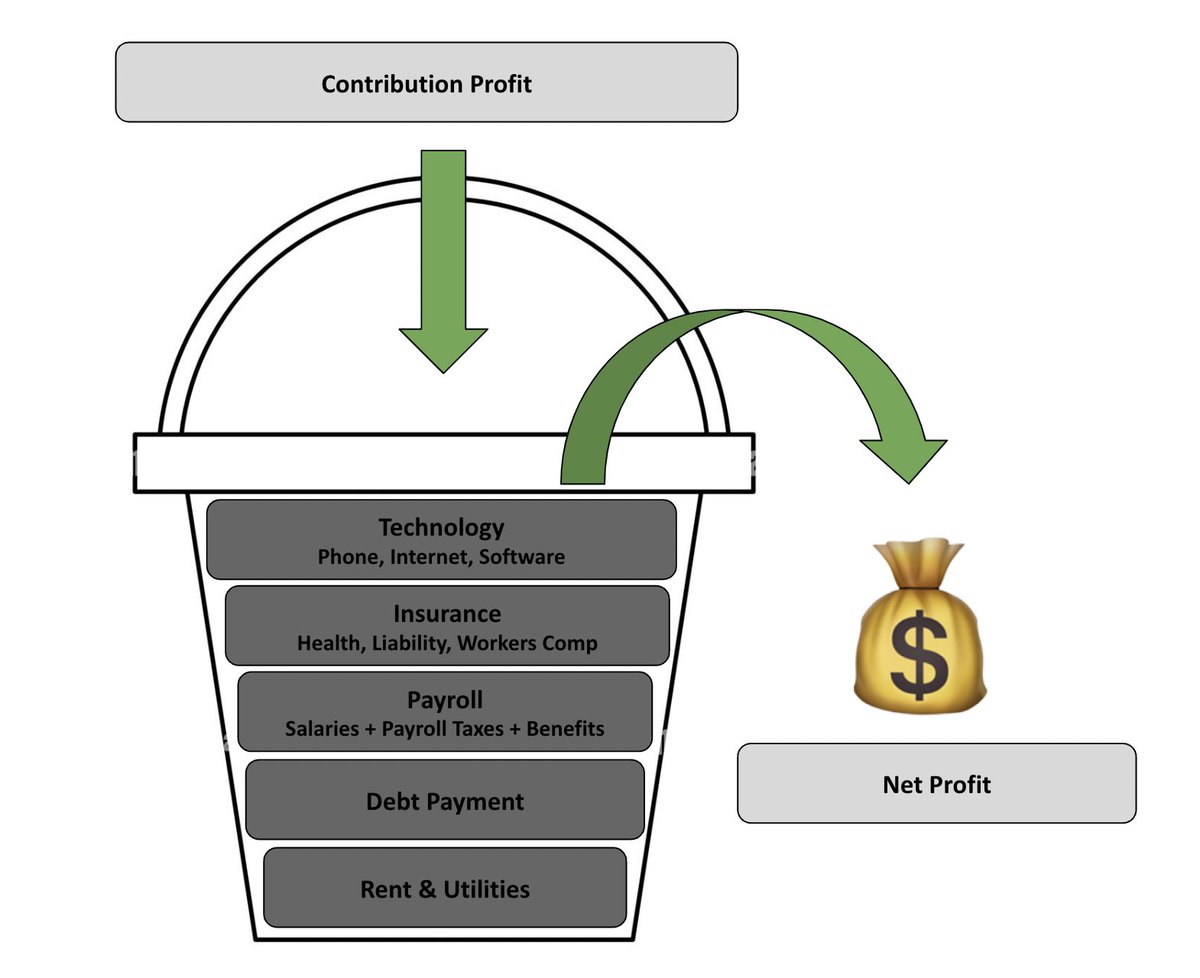
No “net profit” exists until you fill up the bucket up
Once filled all the incremental contribution profit overflows & becomes net profit
(View Tweet)
At the end of every month the bucket empties and you start all over again (View Tweet)
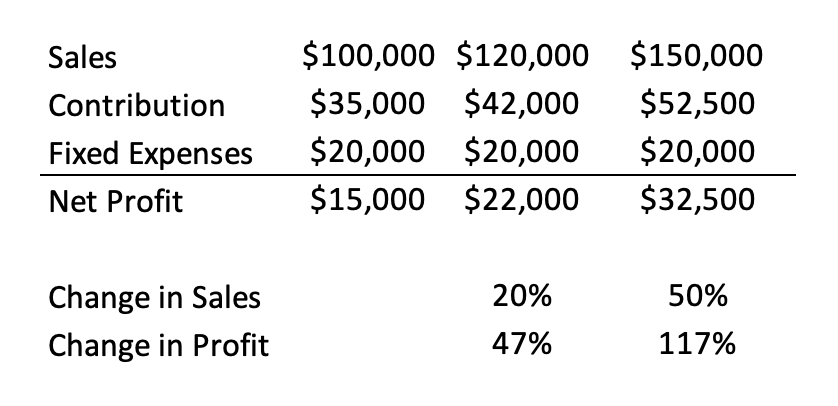
Small increases in sales lead to much larger increases in your net profit
A 20% increase in sales leads to a 47% increase in net profit
A 50% increase in sales leads to a 117% increase in net profit
(View Tweet)
To get started take your P&L and categorize all expenses as either
Variable - it goes up and down with sales. COGS, payroll, cc fees, advertising & royalties (if you’re a franchisee).
Fixed - everything else that doesn’t go up & down with sales (View Tweet)
Play around with your numbers
See what happens when:
Reduce fixed expenses
Some real magic happens when you can do all 3 (View Tweet)
Follow me @brianbeers
If you enjoyed this thread you’d probably enjoy my newsletter where I help people create a fortune through owning franchises
https://t.co/s2diDGCwJs (View Tweet)

 (View Tweet)
 (View Tweet)
 (View Tweet)
 (View Tweet)
 (View Tweet)
 (View Tweet)
 (View Tweet)