Owners of even the cheapest fleabag motels know they must keep track of how many rooms they have & whether they are empty or full.
But today, the year’s busiest shopping day, most retail areas won’t be tracking how many parking spots they have & whether they are empty or full.🧵
(View Tweet)
Note: Thread
This helps explain why so many cities have ill-advised parking policies that frustrate customers, damage economies, waste taxpayer dollars, worsen traffic jams, and, all too often, end with motorists brawling over parking spots.
Let me suggest a few solutions. /2
(View Tweet)
When I lead studies of retail districts, like downtown #VenturaCA, business owners, managers, planners, & politicians often tell me that their shopping area has a “parking problem”. They’re usually right. But what is the nature of that problem? /3
(View Tweet)
Every parking system has two parts: quantity and management.
If people perceive a parking problem, you should always ask, “Do we have a parking supply problem, or a parking management problem? /4
(View Tweet)
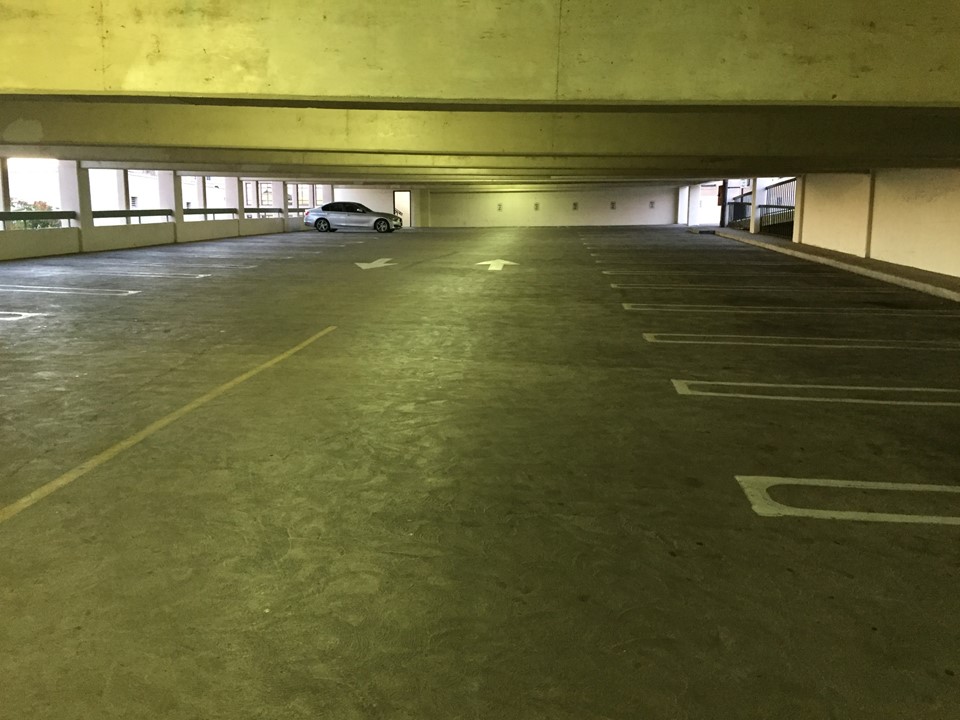
To reveal the nature of the parking problem and solve it, follow these steps. Document the parking supply and occupancy rates in your study area, including both public and private supplies. Explain current conditions using both photos and maps of peak hour parking occupancy. /5
(View Tweet)
In downtown #VenturaCA, for example, the data revealed that the overall parking supply greatly exceeded demand. At least 45% of spaces were empty at even the busiest hour of the week, even though virtually all parking was given away for free. /6
(View Tweet)
Many local merchants perceived (incorrectly) that the city had an overall parking shortage. All the visible parking on Main Street was often full, but parking lots and garages just a block away sat half-empty. /7
(View Tweet)
We asked the community, “Since you have underused off-street garages, can you solve the curb parking problem by building still more garages?” /8
(View Tweet)
Mapping and photographing #Ventura’s existing conditions helped the community realize that they had a parking management problem, not a parking supply problem. Parking quantities were ample, but management was lacking. /9
(View Tweet)
Such “spot shortage” problems can often be quickly resolved by charging the right prices for curb parking. /10
(View Tweet)
Specifically, cities can institute performance-based prices for prime parking spots, adjusting prices on each block to ensure that parking is well-used, but readily available. /11
(View Tweet)
In downtown #Ventura, free curb parking was replaced with performance-based parking pricing (aimed at achieving an 85% occupancy goal on each block). All the revenues were dedicated to improving downtown. /12
(View Tweet)
Minimum parking regulations were also removed or decreased sharply (depending on location), allowing buildings to be constructed with no on-site parking. The first Class A office building erected in downtown #Ventura since the 1920s was then built without any on-site parking. /13
(View Tweet)
As City Manager Rick Cole pointed out, the building was made possible by the new parking code. Without this change, the new building, located on a small infill site, would have been physically and financially infeasible. /14
(View Tweet)
@BillFultonVta, then Mayor of #Ventura, described what happened on the day that Ventura’s performance-based parking pricing program went into effect. /15
(View Tweet)
When introducing the idea of parking pricing, sit down with the key organized interest groups, such as local business and residents’ associations, and make a list of how they would want to see any new parking revenues spent. /16
(View Tweet)
Unless these politically influential interest groups support parking pricing, the concept may not gain solid majority support, and then there won’t be any parking revenue to spend. /17
(View Tweet)
When downtown #Ventura proposed charging for parking at 318 prime parking spots, for example, city staff initially considered spending the resulting $530,000 per year in new parking revenue on a downtown shuttle. /18
(View Tweet)
But when merchants made it clear that improving security was a higher priority to them, the city devoted most revenues to new foot patrols instead. /19
(View Tweet)
The new patrols, explains #Ventura Police Sergeant John Snowling, have “had a tremendous impact in the amount of street-level crime during the daytime hours.” /20
(View Tweet)
After the meters’ installation, downtown crime decreased by 40%, a benefit that helped maintain the support of downtown merchants during the controversial initial months of the parking pricing program. /22
(View Tweet)
Downtown #VenturaCA is just one of many places that have successfully implemented performance-based parking prices, returned the meter revenue to the neighborhood to make it politically popular, and removed costly minimum parking mandates. /23
(View Tweet)
Today, on the busiest shopping day of the year, #BlackFridayParking conditions in your town may be typical: “hotspots” of overcrowded parking in front of popular destinations; lots & garages a few feet away sitting half-empty; and widespread whining about parking problems. /24
(View Tweet)
Your town can do better. #BlackFriday can be a day when customers find at least 1 or 2 parking spots available on every block; when parking revenues flow into your neighborhood’s coffers and then out to fund your highest priorities; and few perceive a parking problem. /25
(View Tweet)
For more on solving your city’s parking problems, read #ParkingAndTheCity, or check out @Parking_Reform’s Parking Benefit Districts – a Guide for Activists. Chapter 1 of the book, and the entire guide, are both free online:
https://t.co/dT0fpARQc2https://t.co/ifdmjhiHFA
26/26 (View Tweet)
 (View Tweet)
 (View Tweet)
 (View Tweet)
 (View Tweet)
 (View Tweet)
 (View Tweet)
 (View Tweet)
 (View Tweet)
 (View Tweet)
 (View Tweet)
 (View Tweet)
 (View Tweet)
 (View Tweet)
 (View Tweet)
 (View Tweet)


 (View Tweet)
 (View Tweet)
 (View Tweet)
 (View Tweet)
 (View Tweet)

 (View Tweet)
 (View Tweet)
 (View Tweet)
 (View Tweet)