People with fancy MBA’s like to create complicated financial models

Metadata
- Author: Brian Beers
- Full Title: People with fancy MBA’s like to create complicated financial models
- Category: #articles
- Summary: People with fancy MBA’s like to create complicated financial models
As a simpleton I break down a P&L into 4 numbers
This model works no matter the size of the business
Highlights
- Every business has 4 key numbers:
- Sales - cash that comes into the business
- Contribution - cash left over after paying all variable expenses
- Fixed Expenses - stable recurring expenses
- Net Profit - profit left after paying all expenses (View Highlight)
- Contribution - cash left over after paying all variable expenses Variable expenses are directly tied to your sales When sales go up, variable expenses go up (View Highlight)
- For franchises there 5 major variable expenses: 1/ COGS - cost of goods sold 2/ Royalty - for franchises 3/ Advertising - you must advertise to drive leads 4/ Direct Payroll - cost of performing the service 5/ Credit Card Fees - cost per transaction (View Highlight)
- Contribution is the amount left over after paying all the variable expenses
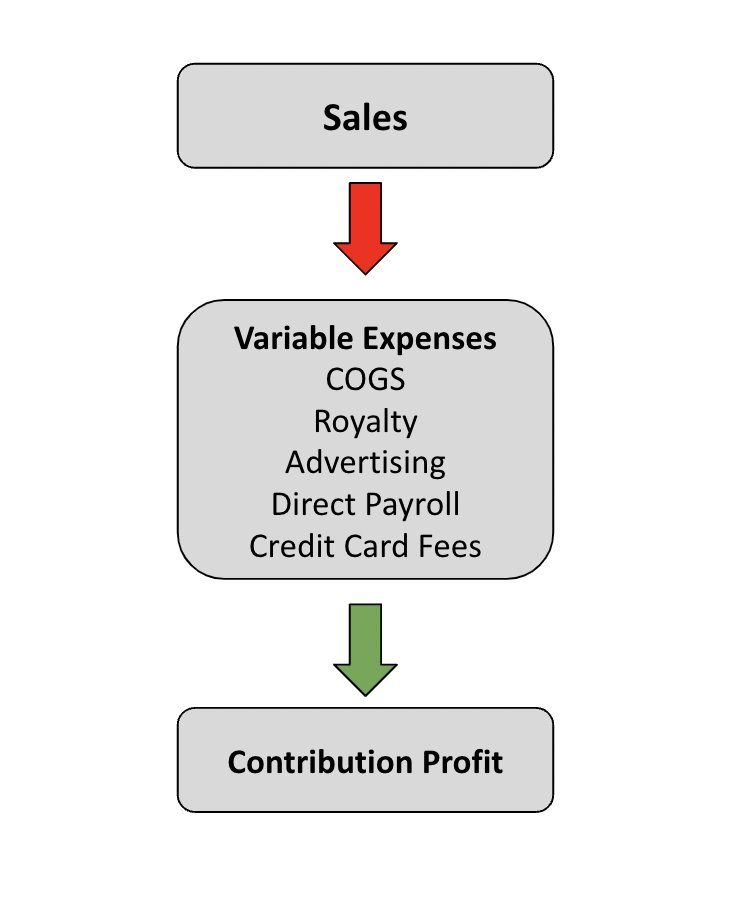 (View Highlight)
 - Fixed Expenses
All of the expenses that are fixed every month. They have minimal correlation to sales volume
- Rent & Utilities
- Debt Payments
- Fixed Payroll (Managers, Admin, etc)
- Insurance
- Technology
- Other Misc Expenses (View Highlight)
- No “net profit” exists until you fill up the bucket up
Once filled all the incremental contribution profit overflows & becomes net profit
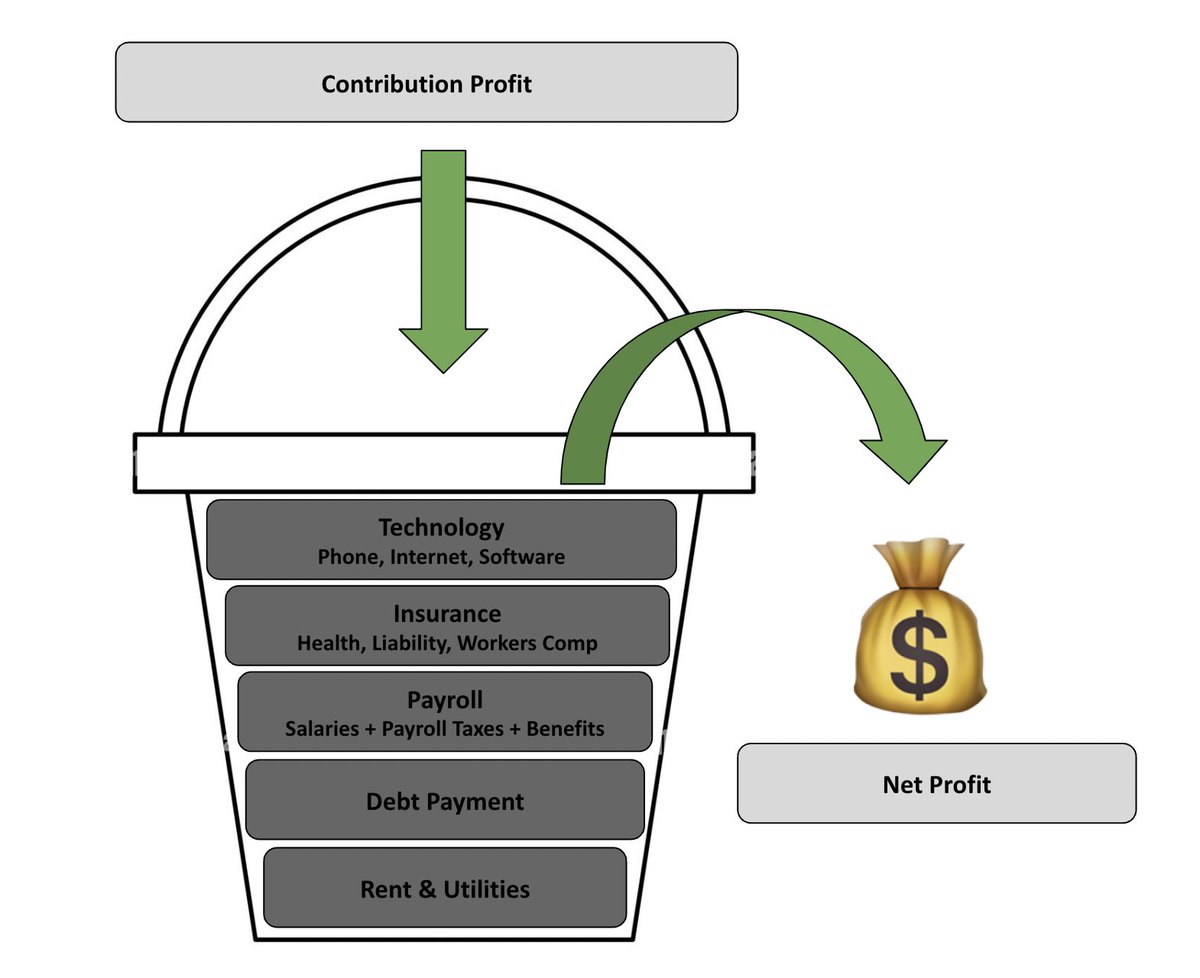 (View Highlight)
 - To get started take your P&L and categorize all expenses as either
- Variable - it goes up and down with sales. COGS, payroll, cc fees, advertising & royalties (if you’re a franchisee).
- Fixed - everything else that doesn’t go up & down with sales (View Highlight)